When to see a vet urgently
Contact a practice immediately if your pet has, for example:
- suspected swallowing of an iron tablet, battery or metal object;
- collapse, difficulty breathing or severe weakness;
- pale mucous membranes and clearly reduced general wellbeing;
- severe pain or a suspected fracture.
Do not begin treatment with supplements or induce vomiting at home. You can find a vet near you for help.
Understanding the terms
- Macronutrients are proteins, fats and carbohydrates: sources of energy and building materials.
- Minerals are divided into two groups:
- major minerals are needed in relatively large amounts: calcium, phosphorus, magnesium, sodium, potassium and chloride;
- trace elements are needed in small amounts: iron, zinc, copper, manganese, selenium and iodine.
Cats are obligate carnivores: they require nutrients found only in animal-derived foods. Dogs are omnivores with a preference for meat.
The difference between major and trace minerals concerns the amount required, rather than importance. Deficiency of a substance needed only in small amounts can also disrupt body function. Conversely, more does not make a nutrient more beneficial. Species, growth stage, energy intake and illness influence the appropriate overall balance.
Cats' particular nutritional needs primarily mean obtaining enough of certain nutrients. Animal origin alone does not guarantee a balanced diet: meat alone can cause severe mineral deficiency. Complete dog food should not be used as a cat's main food either.
The main minerals
Calcium and phosphorus
Function: bones, teeth, muscles and nerves. Deficiency: a homemade meat diet without a calcium source; meat is high in phosphorus and low in calcium, leading to fragile bones and fractures. Excess: skeletal growth problems in large-breed puppies; excess phosphorus accelerates kidney disease progression.
If calcium is too low relative to phosphorus, the body tries to maintain balance through parathyroid hormone, among other mechanisms. Calcium may then be taken from the skeleton, making bones thinner and weaker. A minor accident may cause a fracture. Early dietary correction helps, but severe skeletal deformities already present may not fully reverse.
Managing phosphorus balance may require a kidney diet and, in some situations, a phosphate binder to reduce intestinal absorption. Not every kidney patient automatically needs one. Dietary effects and additional treatment needs are assessed during follow-up, and changing one mineral cannot replace treatment of the rest of the disease.
Magnesium
Function: enzymes, muscles and nerves. Deficiency: rare. Excess: magnesium is a component of struvite stones, although urine acidity and water intake are more important.
Do not remove magnesium from the diet yourself to prevent urinary stones. Stone type and underlying factors determine treatment. Struvite and calcium oxalate prevention may need different measures, and urine acidification is not a universal solution for every stone. Therapeutic food and monitoring are agreed according to investigations.
Sodium, potassium and chloride
Function: fluid balance, nerves and heart. Deficiency: low potassium is possible in cats with kidney disease, causing weakness and a drooping head. Excess: extra sodium is undesirable with heart disease and high blood pressure.
Potassium in a cat with kidney disease is assessed through blood testing as part of investigation. A drooping head or weakness alone does not prove potassium deficiency. Any needed supplement is planned according to measured values and condition; do not add potassium or salt by guesswork.
Iron
Function: blood formation. Deficiency: anaemia more often results from blood loss, including fleas, intestinal parasites or bleeding, than diet. Excess: poisoning from human iron tablets.
Anaemia means too few red blood cells, rather than the same thing as iron deficiency. Cells may be lost, destroyed or produced inadequately. Pale gums are therefore not a reason to give a human iron supplement. The cause needs investigation, and a severely anaemic animal may need urgent supportive care.
Zinc
Function: skin, coat, wound healing and immunity. Deficiency: zinc-responsive skin disease in Huskies and Malamutes, or an unbalanced homemade diet. Excess: swallowed coins and zinc-containing metal parts destroy red blood cells.
A coin's danger depends on its composition; not every coin contains the same amount of zinc. Galvanised metal parts can also be an exposure source. Zinc compounds formed in the stomach can lead to poisoning and red blood cell destruction. A swallowed object still needs assessment if its metal composition is unknown: waiting for symptoms is not a safe identification method.
Zinc-responsive skin disease may involve inherited impaired absorption even when the diet otherwise seems balanced. Crusting on the muzzle or paws does not alone confirm this diagnosis, however. Your vet assesses skin changes and nutrition before choosing a supplement.
Copper
Function: blood formation and enzymes. Deficiency: rare. Excess: copper accumulates in the liver of susceptible dog breeds, causing hepatitis.
A diet for liver problems is chosen according to the diagnosed disease. Copper accumulation and other liver diseases are different situations. The same home-prepared restrictive diet is therefore not started for every animal with abnormal liver values. Adequate energy and protein must also be secured.
Selenium
Function: protecting cells from oxidation. Deficiency: rare with complete food. Excess: the difference between safe and toxic amounts is small; do not supplement without advice.
Iodine
Function: thyroid function. Deficiency: an unbalanced homemade diet. Excess: too much also disrupts thyroid function.
The key rule: balance
Both each mineral's amount and the proportions between them matter, especially calcium and phosphorus. Complete food already contains this balance, and mineral supplements disrupt it.
Avoiding supplements here concerns a healthy animal eating complete food appropriate to their needs. For a diagnosed deficiency or illness, a vet may prescribe a targeted supplement. Its purpose, administration and monitoring then belong in the treatment plan, rather than being a reason to supplement everyone “just in case”.
The calcium-to-phosphorus ratio alone cannot describe dietary suitability. Even with an apparently correct ratio, both may be excessive or inadequate relative to energy intake. High intake of one substance can also impair absorption of another. The whole diet therefore cannot be corrected simply by comparing one supplement's concentration.
Large-breed puppies
Feed large-breed puppy food and do not add calcium, bone meal or quark to “strengthen bones”. Young puppies cannot limit calcium absorption: excess is absorbed and disrupts joint and bone development.
Regulation of calcium absorption develops as a puppy grows. Limited protection against excessive intake in young puppies emphasises the importance of a balanced recipe, but does not mean adults can receive unlimited calcium. Growth is also monitored through weight and body condition: excessive energy and mineral imbalance can occur together.
Home-prepared food
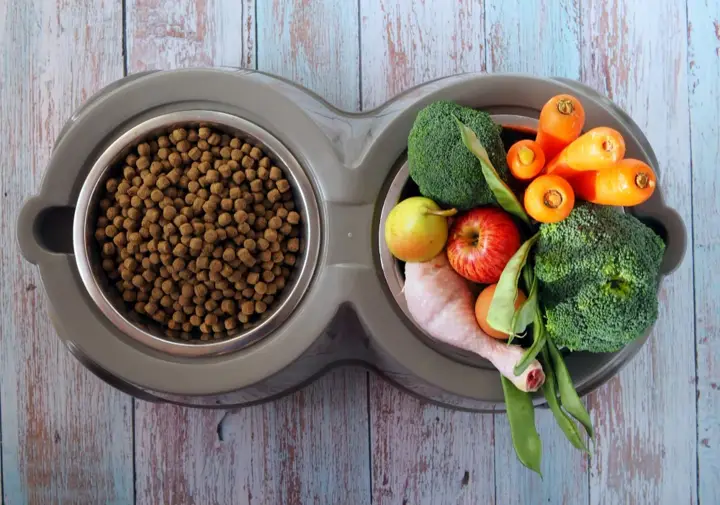
A calcium source and vitamin–mineral mix are almost always needed. A vet experienced in nutrition calculates these for the particular recipe.
The recipe includes both ingredients and supplements designed specifically for it. A general vitamin–mineral mix does not automatically balance any meat meal. Changing an ingredient or leaving part of a portion uneaten also changes actual nutrient intake. Report changes to the professional who formulated the recipe.
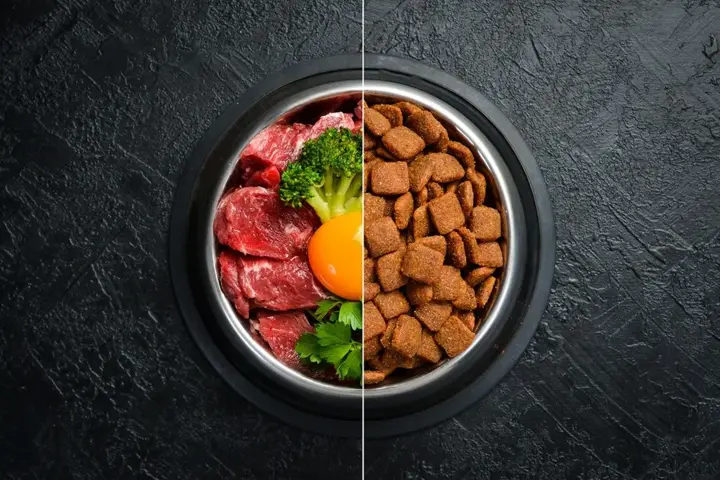
Treats, offal and other foods alongside complete food belong to the same daily total. A small amount of complete food cannot balance a large amount of deficient homemade food. In raw feeding, nutritional balance and microbiological safety are assessed separately: freezing does not remove every pathogen.
Investigating imbalance
Bring details of the main food, treats and every supplement, with an estimate of actual intake. Growth and weight changes, symptom onset and possible foreign objects help guide investigations. Blood tests, skeletal X-rays or other investigations are chosen according to the suspected problem.
After metal ingestion, X-rays may locate the exposure source and blood tests assess consequences. State the possible object type, size and swallowing time. Do not try to correct poisoning with another mineral or wait for deficiency testing before urgent contact.
When to see a vet
- a young animal limps, has painful legs or develops bent bones;
- crusts and bald areas appear on a Husky's or Malamute's muzzle and paws;
- weakness, tiredness or pale gums;
- swallowing a coin, battery or iron tablets: seek help immediately.
Frequently asked questions
Does a pet eating complete food need a mineral supplement?
A healthy animal does not usually need an extra supplement “just in case” alongside suitable complete food. It can change nutrient ratios and absorption. Illness or confirmed deficiency may require targeted veterinary treatment.
Is meat alone a complete diet for a cat?
No. An unbalanced meat-based diet may provide too little calcium relative to phosphorus. This can weaken bones and cause fractures. Home-prepared feeding needs a complete recipe formulated by an expert.
Can I treat pale gums with iron?
Do not start it based on the symptom. Anaemia can result from blood loss, red blood cell destruction or inadequate production. Pallor with weakness or difficulty breathing needs urgent assessment, and human iron is not safe first aid.
Is reducing magnesium enough to prevent urinary stones?
No. Treatment depends on stone type and other findings. Diets for different stones may differ; do not start urine acidification or mineral removal yourself. Drinking and follow-up are also part of the plan.
This article is for general information only and is not a guide to treatment. If you notice the first signs of illness, contact your vet.
Paw4care editorial team
Sources
- National Research Council. Nutrient Requirements of Dogs and Cats, 2006.
- FEDIAF Nutritional Guidelines for Complete and Complementary Pet Food for Cats and Dogs.
- Lauten S. D. Nutritional risks to large-breed dogs: from weaning to the geriatric years. Vet Clin North Am Small Anim Pract, 2006.
- Hand M. S. ym. Small Animal Clinical Nutrition, 5. painos.
- Nutritional Requirements of Small Animals, Merck Veterinary Manual, accessed 2026-11-05.
- Nutritional Guidelines for Complete and Complementary Pet Food for Cats and Dogs, September 2025, FEDIAF EuropeanPetFood, accessed 2026-11-05.
- Bone Disorders in Cats, Merck Veterinary Manual, accessed 2026-11-05.
- Zinc Toxicosis in Animals, Merck Veterinary Manual, accessed 2026-11-05.
- Anaemia, Cornell Feline Health Centre, accessed 2026-11-05.
- 2026 iCatCare Consensus Guidelines on the Diagnosis and Management of Chronic Kidney Disease in Cats, iCatCare / Journal of Feline Medicine and Surgery, accessed 2026-11-05.
- ACVIM Small Animal Consensus Recommendations on the Treatment and Prevention of Uroliths in Dogs and Cats, Journal of Veterinary Internal Medicine / Utrecht University, accessed 2026-11-05.
- Frequently Asked Questions & Myths, WSAVA Global Nutrition Committee, accessed 2026-11-05.
- Nutrition in Hepatic Disease in Small Animals, Merck Veterinary Manual, accessed 2026-11-05.
- Is It Ever Safe to Induce Vomiting?, ASPCA, accessed 2026-11-05.
- What to Do in a Dog or Cat Emergency, Merck Veterinary Manual, accessed 2026-11-05.
- Raw pet foods: handling and preventing infection, Animal and Plant Health Agency, accessed 2026-11-14.