
Veterinary care in the UK · Parasites and diseases
Lungworm in dogs in the UK: how dogs catch it and how to protect them
Lungworm is a parasite that can make dogs seriously ill. The species that matters most in the UK is Angiostrongylus vasorum, sometimes called French heartworm. Despite its common name, the adult worms live in the heart and the large blood vessels that supply the lungs. Lungworm used to be found mainly in parts of southern England and Wales. It has since spread across much of the UK, including northern England, Scotland and Northern Ireland. Vets now consider that most dogs who spend time outdoors could come into contact with it. The good news is that it can be prevented and, when caught early, treated.

Dogs catch lungworm by eating slugs and snails, or by picking up their slime.
How dogs catch lungworm
The parasite has a life cycle that runs through slugs and snails:
- Infected dogs and foxes pass lungworm larvae in their faeces.
- Slugs and snails pick up the larvae, which develop inside them.
- A dog becomes infected by eating a slug or snail, whether on purpose or by accident.
Dogs can swallow small slugs and snails hidden in grass, on toys, in water bowls left outside or in puddles. Frogs can also carry the larvae. Foxes are an important wildlife source of infection, which is one reason lungworm is now common in towns and cities as well as the countryside.
Dogs do not catch lungworm directly from other dogs. Young dogs and dogs who like to eat or play with slugs and snails seem to be at higher risk, but any dog can be infected.
A different lungworm, Aelurostrongylus abstrusus, can infect cats, usually after they eat birds or rodents. It is generally milder. This guide focuses on dogs.
Signs of lungworm
Signs can be vague and vary a lot from dog to dog. Some infected dogs show no signs at first. Common signs include:
- coughing, particularly a persistent cough;
- breathing difficulties or tiring easily on walks;
- bleeding problems: nosebleeds, bleeding from the gums, bruising, blood in the urine or eyes, or wounds that keep bleeding;
- lethargy, weight loss and poor appetite;
- vomiting or diarrhoea;
- in some dogs, behaviour changes, wobbliness or seizures, if bleeding affects the brain or spinal cord.
The bleeding problems happen because the parasite interferes with the way blood clots. This can make an infected dog bleed heavily after a minor injury or during surgery.
If your dog has any of these signs, contact your vet. A dog with sudden breathing problems, collapse, a seizure or unexplained bleeding needs emergency care.
Why lungworm has spread
Several things have helped lungworm spread across the UK. Foxes, which carry the parasite, are now common in towns and cities, where they share parks and gardens with pet dogs. Mild, wet weather suits slugs and snails, and they are active for much of the year in many parts of the country. Dogs also travel more with their owners, carrying parasites to new areas.
Because the risk is now widespread, vets no longer think of lungworm as a problem only for dogs in a few hotspots. Ask your vet how common it is in your area: they see local cases and can tell you whether they recommend year-round protection.
Diagnosis and treatment
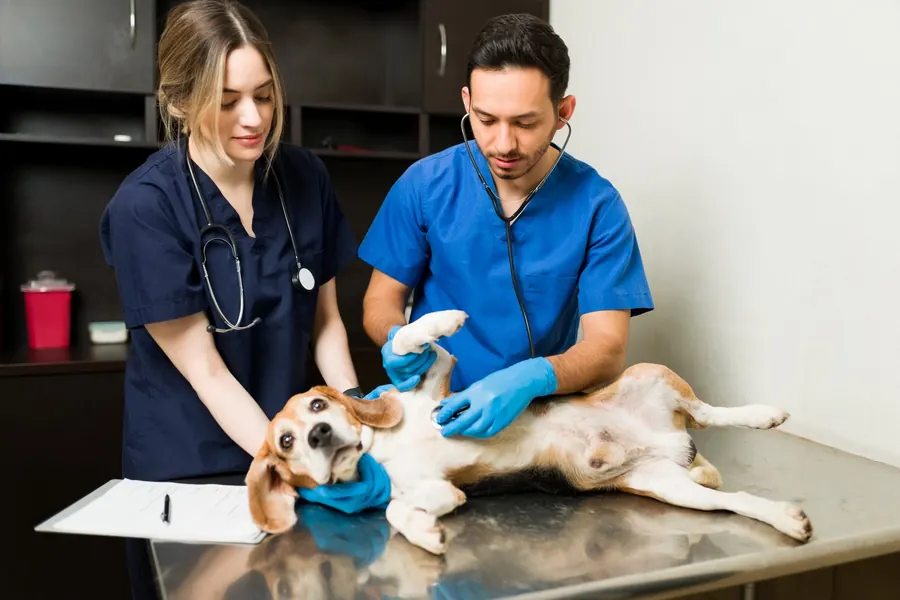
Your vet will examine your dog and ask about its lifestyle, its worming history and whether it eats slugs or snails. Tests may include:
- a rapid blood test that detects lungworm in the blood, often run in the practice;
- faecal tests, usually on samples collected over three days, because larvae are passed intermittently;
- blood clotting tests, X-rays or other imaging if your dog is unwell.
Lungworm is treated with prescription antiparasitic medicines. Dogs who are seriously ill may also need hospital care, oxygen, fluids or treatment for bleeding. Most dogs diagnosed early respond well to treatment. Severe infections, especially with bleeding into the brain or lungs, can be fatal, which is why prevention matters.
After treatment
Most dogs need a course of treatment followed by follow-up tests to make sure the infection has cleared. Your vet may advise restricting exercise for a while, particularly if your dog had breathing problems, because dying worms can cause inflammation in the lungs. Tell your vet if coughing or breathing problems get worse during treatment.
Once your dog has recovered, start regular prevention. A dog that has had lungworm can be infected again if it eats more infected slugs or snails.
Protecting your dog
Not every wormer protects against lungworm. Many over-the-counter wormers treat roundworms and tapeworms but are not licensed to prevent lungworm. Products that prevent lungworm are prescription-only veterinary medicines, available as monthly spot-on treatments or tablets. Some also cover fleas, ticks and other worms.

Your vet will recommend a parasite plan based on where you live and your dog's lifestyle. For many dogs in the UK, that means monthly lungworm prevention all year round, because slugs and snails are active in mild, wet weather in every season.
Everyday steps also help:
- pick up toys from the garden overnight, as slugs and snails crawl over them;
- do not leave water or food bowls outside;
- discourage your dog from eating grass or drinking from puddles where slugs gather;
- pick up and bin your dog's poo promptly, to avoid spreading larvae;
- check with your vet before using slug pellets, which can be toxic to pets and wildlife.
Lungworm and travel
Angiostrongylus vasorum is also found in many other European countries. If you travel abroad with your dog, ask your vet about parasite protection before you go. For the rules on tapeworm treatment when bringing dogs into Great Britain, see our guide to pet travel from the UK after Brexit.
Frequently asked questions
Is lungworm the same as kennel cough?
No. Kennel cough is a respiratory infection caused by viruses and bacteria and spreads between dogs. Lungworm is a parasite caught from slugs and snails. Both can cause coughing, so a vet check is needed.
Can people catch lungworm from dogs?
The lungworm Angiostrongylus vasorum does not infect people. Good hygiene after handling dog faeces is still sensible.
My dog has never eaten a slug. Can it still get lungworm?
Yes. Dogs can swallow tiny slugs or snails accidentally, for example on grass, toys or in water left outside. That is why vets recommend prevention for most dogs.
How often should my dog have lungworm treatment?
Most preventive products are given monthly. Your vet will advise on the right product and schedule for your dog.
Can cats get lungworm?
Cats can be infected with a different lungworm, usually through eating birds or rodents. Ask your vet if your cat hunts and has a persistent cough.
Does my usual wormer protect against lungworm?
Not necessarily. Many wormers sold in shops treat roundworms and tapeworms only. Check with your vet whether your dog's product prevents lungworm, as products that do are prescription-only.
Is lungworm more common in some parts of the UK?
It was first common in parts of southern England and Wales, but cases are now seen across much of the UK. Your vet will know how often they see it locally.
Sources
- Lungworm in dogs, PDSA, accessed 2026-11-18.
- Lungworm in dogs, The Royal Kennel Club, accessed 2026-11-18.
- ESCCAP UK & Ireland: parasite control guidance, ESCCAP UK & Ireland, accessed 2026-11-18.
 Law and rulesRoad accidents involving dogs and cats in the UK: the law and what to doWhat UK law says if you hit a dog or a cat with your car, how to help an injured animal safely, who to call, and what to do if your own pet is hurt or missing.
 Parasites and diseasesAlabama rot in UK dogs: signs, risk and what to doAlabama rot (CRGV) is a rare but serious disease of UK dogs. Learn the skin signs, when cases peak, why it affects the kidneys and when to see a vet.
 Pet servicesBoarding kennels, catteries and pet sitters in the UK: licences and what to checkWho needs a council licence to board dogs and cats in the UK, what the star ratings mean, vaccinations kennels ask for and how to choose a kennel, cattery or pet sitter.