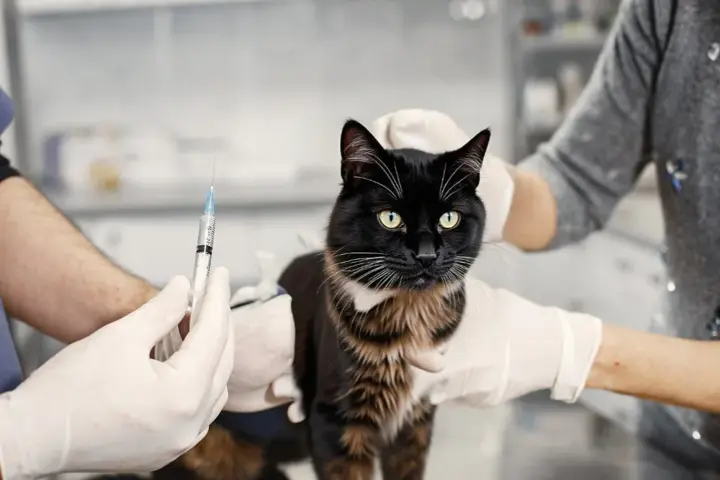
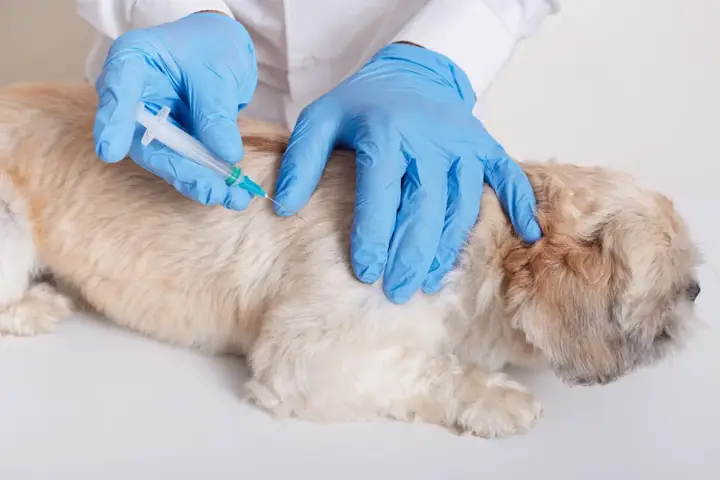
Vaccines fall into three groups:
- Required vaccines: rabies vaccination may be required for travel and under national rules. Check the requirements for your country and destination, including any pet passport requirements.
- Core vaccines: these protect against dangerous, common diseases and are recommended for all animals by WSAVA.
- Non-core vaccines: these depend on lifestyle, including boarding, shows, classes, hunting and travel abroad.
Your vet draws up the final plan according to the product information for the vaccine being used.
A recommendation and a legal requirement are different things. Rabies protection may also be needed for particular activities within a country, such as hunting. Recommendations for pet dogs and cats may extend beyond travel requirements. Assess protection according to local rules and risk; travel abroad is not the only reason to consider it.
A vaccine teaches the immune system to recognise a pathogen. It does not treat an animal that is already ill or protect against every infectious disease. A vaccinated animal can still become ill, but vaccination may prevent severe disease or reduce symptoms. Protection depends on the vaccine, pathogen and animal's response.
When to see a vet urgently
Immediate help is needed if an animal develops the following after vaccination:
- difficulty breathing or rapidly worsening facial swelling;
- collapse, reduced consciousness or an inability to stand;
- persistent vomiting or diarrhoea with a marked deterioration in general condition.
Do not wait until an agreed observation period ends if severe symptoms appear. You can find a vet near you.
Dogs
Core vaccines protect against distemper, parvovirus and infectious canine hepatitis; rabies vaccination is also recommended according to local risk and requirements. Non-core vaccines include kennel cough protection against parainfluenza and Bordetella, often recommended for dogs that meet many others, and leptospirosis protection for travel and as advised by a vet.
The name of a combination vaccine alone does not tell you how long protection from each component lasts. For example, follow-up for a respiratory component may differ from that for the other components. Kennel cough is not a single disease whose every cause is covered by one vaccine. Limit a coughing dog's contacts regardless of vaccination history.
The classification of leptospirosis vaccination varies by region. North American recommendations classify it as core, while global guidance bases core status on the local disease situation and availability of suitable vaccines. The choice depends on local risk, travel and the particular product's information. Being non-core does not make a vaccine unimportant for a dog at risk.
Cats
Core vaccines protect against feline enteritis, also called panleukopenia, and cat flu caused by herpesvirus and calicivirus; rabies protection is considered for outdoor cats and before travel according to local risk and rules. Non-core vaccines include feline leukaemia virus, or FeLV, for young and outdoor cats according to risk, and chlamydia in breeding establishments where it occurs. Availability of a vaccine against feline immunodeficiency virus, or FIV, differs between countries; your vet can advise on local options.
An indoor cat's vaccination needs are not determined solely by outdoor access. Your vet considers other cats in the household, boarding and possible new contacts. Protection against cat flu does not necessarily prevent viral infection or a carrier state. Separating a sneezing cat and maintaining hygiene are therefore necessary even in a vaccinated household.
FeLV risk relates to the possibility of meeting infected cats or cats of unknown status. An outdoor cat sharing the same home can also affect another cat's risk. Global recommendations emphasise FeLV vaccination in young cats in areas where the virus is common. Reassess the plan when circumstances change.
Primary vaccinations for puppies and kittens
Antibodies received from the mother can counteract a vaccine in the first months of life, so a limited number of early vaccinations may be insufficient.
The amount of maternal antibodies and the time they disappear vary. A young animal may pass through a stage when these antibodies no longer protect adequately against infection but still interfere with its vaccine response. The series aims to reach the point when it can develop its own protection. The exact start depends on the product and infection pressure, so the overview below does not replace an individual plan.
- Your vet chooses when to start vaccination according to the product and infection risk.
- Repeat vaccinations follow the intervals your vet recommends for that product.
- The final primary vaccination must be timed to allow protection to develop despite maternal antibodies.
- A subsequent booster is planned according to the vaccine and veterinary guidance.
- Rabies vaccination follows the product information and applicable rules; check the required waiting period before travel.
The timing of a later puppy or kitten booster is based on the animal's age and the product used, rather than simply a fixed wait after the previous vaccination. Record the plan for the specific vaccine. Rabies vaccination for travel must also meet validity requirements, so the medical need for a booster and eligibility to travel are not exactly the same question.
Avoid places where many dogs gather before the vaccination series is complete and during the 10–14 days after the final vaccination while protection develops.
However, socialisation need not be postponed entirely until after the series. Young animals can safely become familiar with sounds, handling and selected healthy animals without visiting places with high infection pressure. Your vet can help balance infection avoidance with behavioural development. Check the vaccine information for how long protection takes to develop.
Adult animals
- Live vaccines against canine distemper, parvovirus and infectious hepatitis, and feline enteritis, may provide longer-lasting protection. Your vet plans boosters according to guidance and the product's licence.
- Leptospirosis protection is relatively short-lived, so follow your vet's recommended booster plan.
- Rabies vaccination follows the product information; for travel, its recorded validity must meet the applicable documentation rules.
- If an adult previously completed primary vaccination but misses a booster, your vet checks whether a booster is sufficient rather than automatically repeating the whole series.
A late booster therefore does not automatically mean repeating the entire puppy or kitten programme, but the same rule does not apply equally to every vaccine. Live and inactivated products and different administration routes may require different follow-up. An uncertain vaccination history also differs from a documented but delayed booster.
Bring the vaccination record or pet passport and ask for the next review date in writing. Different vaccines may fall due on different dates. Health checks remain necessary in years when no booster for a long-lasting core vaccine is needed. Lifestyle changes may create a new vaccination need before the existing reminder date.
Travel documents for pets
Where required for travel, identification must link the rabies vaccination to the correct animal before vaccination. The appropriate travel document records the vaccine's validity; an ordinary vaccination card does not replace required travel documentation. Check requirements for both the destination and the return journey. A change of owner or travel without the owner may alter the conditions that apply.
The waiting period after a primary vaccination differs from the conditions for a booster given on time. If validity lapses, an old passport alone does not guarantee eligibility to travel. Boarding establishments, shows and competitions may also have their own entry conditions. Arrange a vaccination review before booking tickets.
Before and after vaccination
- Only a healthy animal is vaccinated after examination by a vet.
- Worming and parasite treatments follow a plan separately from vaccination.
- Tiredness and slight swelling at the injection site for 1–2 days are normal.
- Stay near the practice for the first 30 minutes so the vet can help if an allergic reaction occurs.
Tell the vet about previous vaccine reactions, current symptoms, pregnancy and medication. A previous adverse reaction does not always mean permanently avoiding every vaccine; benefits and risks are assessed individually. Do not reduce a vaccine dose yourself according to the animal's size. Vaccine dosing differs from that of many medicines given according to body weight.
You can make a cat's vaccination visit easier by getting it used to its carrier at home. Leave the carrier out with familiar soft bedding inside. A removable top may allow examination in the lower half, avoiding the need to pull the cat through a narrow door. If several cats are coming, each travels in its own carrier. Calm handling also helps assess health.
Support the carrier from underneath when carrying it and make sure it cannot swing about during the journey. Do not open it in a moving car. If travel causes severe fear or nausea, arrange help with your vet in advance rather than repeatedly missing vaccination visits.
A combination vaccine does not generally overload the immune system simply because it contains several pathogens. However, giving different products at the same time depends on their compatibility information and the animal's history. The vet can plan separate visits if there is a medical reason.
Mild, temporary tiredness or tenderness at the injection site may be an expected reaction. However, severe pain, persistent vomiting or deteriorating condition should not simply be monitored as normal side effects. Explain when symptoms began and which vaccines were given. Call immediately if a severe reaction is suspected.
When to see a vet
- Facial swelling, hives, vomiting, difficulty breathing or weakness during the first hours after vaccination.
- An injection-site lump in a cat that persists for more than 3 months, is larger than 2 cm or continues to grow a month after vaccination: the 3-2-1 rule.
An injection-site lump is not automatically a tumour. A persistent or growing lesion needs investigation, but assessing a lump in an otherwise well cat differs from the emergency caused by breathing difficulty. Contact the practice and arrange an examination. Do not squeeze the lump or decide what it is from size alone.
Frequently asked questions
Does an indoor cat need vaccinations?
It usually needs core protection, but its extent is assessed individually. Other cats in the household, boarding and future contacts are considered as well as current outdoor access.
Does the series start again if a booster is late?
Not automatically. Your vet checks previous records, the vaccine type and product instructions. Rabies vaccination's validity for travel is also assessed against the applicable rules.
Can a vaccinated animal still become infected?
Yes. Not all vaccines completely prevent infection itself, even when they reduce the risk of severe disease or symptoms. Limit an ill animal's contacts and have its condition assessed by a vet when necessary.
This article is for general information only and is not a guide to treatment. If you notice the first signs of illness, contact your vet.
Paw4care editorial team
Sources
- WSAVA Guidelines for the Vaccination of Dogs and Cats, 2024.
- AAHA Canine Vaccination Guidelines, 2022; AAHA/AAFP Feline Vaccination Guidelines, 2020.
- 2024 guidelines for the vaccination of dogs and cats, WSAVA, accessed 2026-11-05.
- 2020 AAHA/AAFP Feline Vaccination Guidelines: Frequently Asked Questions, AAHA, accessed 2026-11-05.
- 2022 AAHA Canine Vaccination Guidelines: FAQs, AAHA, accessed 2026-11-05.
- Feline vaccines: benefits and risks, Cornell University, accessed 2026-11-05.
- What to expect after your pet’s vaccination, AVMA, University of Minnesota, accessed 2026-11-05.
- Visiting Your Vet, Feline Veterinary Medical Association, accessed 2026-11-05.
- Dog Vaccines, PDSA, accessed 2026-11-14.
- Cat and kitten vaccinations, PDSA, accessed 2026-11-14.
- Bringing your pet dog, cat or ferret to Great Britain, GOV.UK, accessed 2026-11-14.