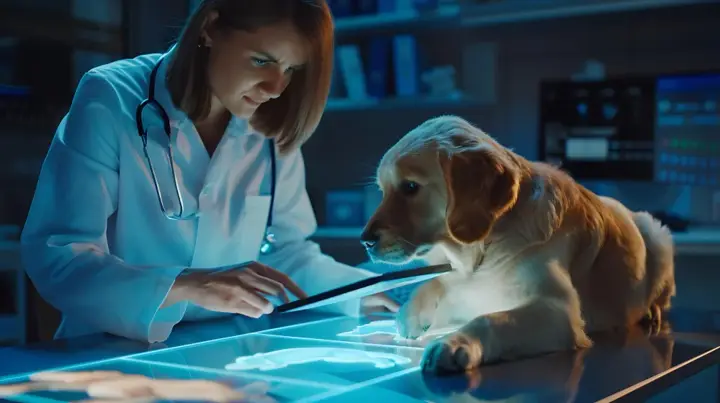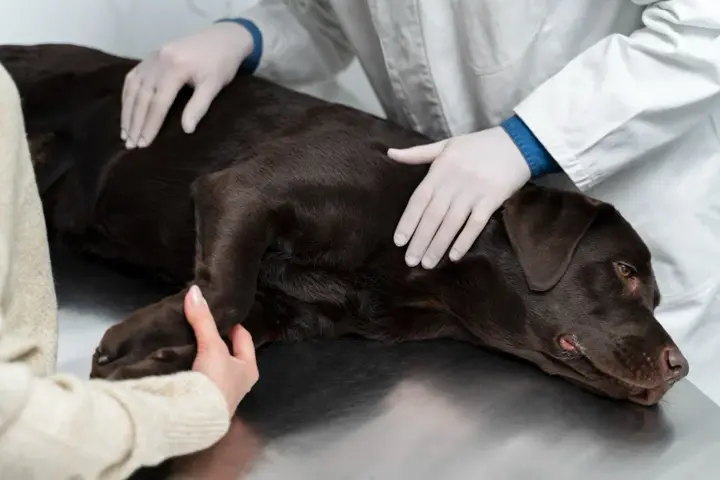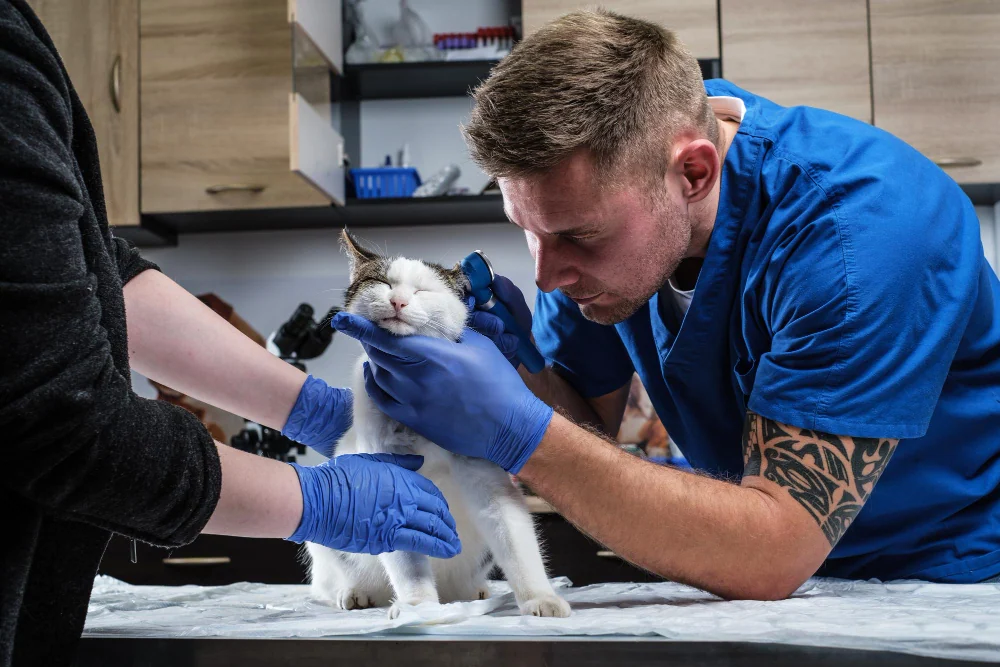
Home care is planned according to the procedure, injury and your pet's abilities. A tidy skin wound or cheerful behaviour does not yet show that deeper tissues have healed. Before discharge, make sure you know what your pet may do, what help they need and which changes require you to contact the practice.
When to see a vet urgently
Contact a vet immediately if the following signs develop during recovery:
- Your pet suddenly becomes very weak or can no longer walk.
- New signs of limb paralysis develop, or your pet cannot urinate.
- The wound opens or bleeds continuously.
- Pain increases markedly, or general health worsens alongside vomiting.
Do not continue exercises or wait for the planned follow-up. You can find a vet near you.
Why rehabilitation matters
- Muscles waste quickly when a limb is not used.
- Joints become stiff during rest.
- The right amount of movement speeds healing and reduces pain.
- However, exercise that is too early or too vigorous can compromise the surgical outcome.
Suitable movement depends on the stage of healing. The same programme is not used for every bone, ligament and spinal patient, for example. Early goals may be protecting tissues and comfortable everyday life; later goals may be improving mobility, strength or coordination. Progress does not depend solely on how long it has been since surgery.
1. Pain relief and monitoring
- Give pain medicines as instructed, even when your pet seems well.
- Signs of pain include panting at rest, restlessness, whining, hiding, loss of appetite and irritability.
- Cold treatment, such as a cold pack wrapped in a cloth for 10–15 minutes, may reduce swelling in the first few days; ask your vet first.
- Never give human painkillers.
Record medicines given and any changes in appetite, movement and rest. If you are unsure whether a medicine was successfully given, ask the treating team for advice. Do not add another pet's medicines or over-the-counter products to the treatment. Even a prescribed animal painkiller can cause adverse effects.
Vomiting, diarrhoea, not eating or clearly reduced activity may be related to the disease or medicines. Contact your vet about these and follow the adverse-effect instructions provided. Do not treat worsening pain yourself by giving more medicine or increasing exercises.
Confirm whether and how cold treatment should be used for your own pet. The duration above is not a universal programme for every operation or injury. If your pet finds handling painful, do not force them to tolerate a pack. Cold treatment may complement other pain relief when needed, but does not replace assessment of medicines or the wound.
2. Restricting exercise
- Follow your vet's instructions closely: often only short lead walks, without running, jumping or stairs.
- Use a crate or small room if needed.
- Put rugs on slippery floors.
- Increase exercise gradually according to follow-up assessments.
Make the home safe before exercising
Restrict access to sofas, beds and other places your pet could jump from. A gate can block stairs. Routes from the bed to food and water and outside or to the litter tray must also provide grip. A low-sided litter tray may make entry easier for a cat.
Rest does not mean keeping every patient completely immobile in the same way. Permitted outdoor activity and any assistance are agreed separately. Ask to be shown safe support if your pet cannot manage independently. Do not test for yourself whether an operated limb can already cope with a longer walk.
If your pet becomes excited, tries to climb over the barrier or cannot settle to rest, tell the treating team. The plan can be adapted to everyday life. Removing restrictions simply because of restlessness can jeopardise healing.
3. Exercises and massage at home
Perform only exercises demonstrated by your vet or animal physiotherapist:
- Passive range-of-motion exercises, gently bending and straightening a joint.
- Weight-shifting exercises, with your pet standing and weight gently transferred onto the operated limb.
- Slow lead walking, later including uphill walking.
- Sit-to-stand exercises to build muscle strength.
- Gentle massage around the surgical area, not directly on the wound.
Stop an exercise if your pet shows pain.
The exercises listed are examples, rather than a starting programme for everyone. Weight shifting, sit-to-stand and uphill walking do not suit every stage of recovery. Your vet or physiotherapist explains when an exercise is allowed and its goal. Do not add load to the operated area yourself.
In passive exercises, a joint is moved without your pet's own active muscle work. This alone does not replace strength training. Movement must stay within the instructed, tolerated range, without twisting a joint beyond resistance. Ask to practise at the appointment if the hold or direction of movement is unclear.
Do not massage a fresh wound, inflamed skin or a clearly tender area. New swelling or pain needs examination before treatment continues. Also observe your pet after exercise: increased lameness, fatigue or pain is a reason to review the workload. More rehabilitation does not automatically produce a better result.
4. Feeding and drinking
- A less active pet needs less energy; reduce the portion to prevent weight gain.
- Adequate protein supports tissue healing.
- Keep fresh water available at all times.
Food is not automatically reduced after surgery. Less movement may reduce energy use, but healing requires energy and nutrients. Starting weight, muscle condition, actual intake and other diseases affect the plan. A thin patient or one eating poorly has different needs from an overweight animal otherwise eating well.
Record actual food intake, because the amount offered is not the amount eaten. Food used for enrichment also counts towards the total. If appetite is poor, treatment of pain, nausea and other causes is assessed. A cat's prolonged failure to eat, in particular, is not resolved simply by reducing the food offered.
Follow any special dietary instructions. Food consistency may need changing according to the procedure, and a chew is not automatically suitable for an animal recovering from oral surgery, for example. Place food and water where your pet can reach them without difficult climbing.
Do not force-feed an animal with a syringe without appropriate assessment. Inadequate food intake may require other nutritional support, such as a feeding tube. Report changes in drinking and urination promptly too, so hydration and the success of home care can be assessed.
5. Wound care
- Check the wound daily.
- Prevent licking with a protective collar or recovery suit.
- No bathing before stitches are removed.
- Contact the veterinary practice if the wound becomes red, bleeds, discharges, smells or opens.
The wound edges should stay together. Mild early redness may differ clearly from increasing redness, heat or discharge. Compare the wound with its appearance at discharge and describe the direction of change. Do not wait for every sign of infection before contacting the practice.
Not all stitches are removed, so do not judge permission to wash solely by stitch removal. Keep the wound dry according to your instructions. Do not apply creams or cleaning products unless prescribed. Alcohol and hydrogen peroxide can damage healing tissue.
Protection must prevent access to the wound even when your pet is briefly alone. If the collar or suit does not work, ask for a better-fitting solution. Prevent another pet from licking the wound as well. Do not remove protection simply because the wound already looks tidy.
If a bandage, splint or cast is in use, monitor its cleanliness, dryness and position. Swollen or cold toes, a bad smell or sudden pain can indicate a problem. Do not tighten, cut or refit a dressing at home without specific instructions.
6. Mental wellbeing
A rest period is boring for a pet. Mental stimulation reduces stress and destructive behaviour:
- Activity toys and snuffle mats.
- Searching for food within a small area.
- Calm trick training, such as a nose touch.
- Chews.
- Affection and quiet time together.
Choose activities without jumping, sudden turns or strong pulling. Even scent work or a food puzzle may overexcite your pet, so observe their actual movements. Enrichment is adapted to permitted activity and feeding. Check that chews suit the procedure and diet.
For a cat, provide a quiet hiding place at an easily accessible level. Reduce noise and disturbance from other animals. Offer company on your pet's terms: constant handling does not always help a painful or tired patient relax.
7. Follow-up appointments
- Wound checks and stitch removal.
- Follow-up imaging after orthopaedic surgery where needed.
- Physiotherapy appointments and exercise updates.
- Adjusting treatment according to recovery.
Contact your vet if lameness worsens, your pet does not bear weight on a leg or general health deteriorates.
Follow-up assesses not only the skin but, where needed, healing of deeper tissues and recovery of function. A good-looking wound alone does not establish bone healing, for example. Increasing exercise may therefore require examination or new images before moving to the next stage.
Bring observations on medicines, eating and everyday activities. A short video of normal walking can add to the assessment if it can be recorded safely without extra strain. Also report exercises that could not be carried out. Changing the instructions is more useful than continuing an unclear or painful technique at home.
Frequently asked questions
Can a dog that seems well run after surgery?
A cheerful mood or little lameness does not show that every tissue has healed. Exercise is increased according to the treatment plan and follow-up findings, rather than willingness alone.
Should food always be reduced during rest?
Not automatically. Energy intake is matched to weight, muscle condition, appetite and healing needs. Undernutrition is avoided as well as excessive weight gain.
Can I clean a surgical wound with disinfectant?
Only according to the wound care instructions provided. Do not add creams or cleaning agents yourself. Alcohol and hydrogen peroxide can interfere with tissue healing.
What should I do if an exercise increases lameness?
Stop the exercise and contact the treating team to review the workload. Sudden severe pain, new weakness or signs of paralysis need urgent assessment.
This article is for general information only and is not a guide to treatment. If you notice the first signs of illness, contact your vet.
Paw4care editorial team
Sources
- Millis DL, Levine D. Canine Rehabilitation and Physical Therapy. 2. painos.
- WSAVA Guidelines for the Recognition, Assessment and Treatment of Pain, 2022.
- Postoperative Care After Surgery: What Animal Owners Should Expect, American College of Veterinary Surgeons, accessed 2026-11-03.
- Nonpharmacologic Modalities for Pain Management, American Animal Hospital Association, accessed 2026-11-03.
- Manual Therapy in Veterinary Patients, Merck Veterinary Manual, accessed 2026-11-03.
- ACVIM consensus statement on diagnosis and management of acute canine thoracolumbar intervertebral disc extrusion, Journal of Veterinary Internal Medicine, accessed 2026-11-03.
- Rehabilitation Therapies, American Association of Rehabilitation Vets, accessed 2026-11-03.
- Get the Facts about Pain Relievers for Pets, US Food and Drug Administration, accessed 2026-11-03.
- 2022 ISFM Consensus Guidelines on Management of the Inappetent Hospitalised Cat, Journal of Feline Medicine and Surgery, accessed 2026-11-03.
- Care of Surgical Incisions in Cats, VCA Animal Hospitals, accessed 2026-11-03.
- Chronic Pain Assessment in Cats, American Animal Hospital Association, accessed 2026-11-03.
- Feeding Plans for Hospitalised Patients, American Animal Hospital Association, accessed 2026-11-03.
- Care of Surgical Incisions in Dogs, VCA Animal Hospitals, accessed 2026-11-03.