This guide explains how often to groom, which tools suit which coat, how to bath a dog (and, occasionally, a cat) safely, and when a skin or coat problem needs a vet.
Why grooming matters for health
- Early detection: you will notice fleas, ticks, scabs, lumps, dry patches and wounds while they are small.
- Healthy skin: brushing removes loose hair and debris that can trap moisture and bacteria, and stimulates the skin.
- No mats: mats pull painfully on the skin, hide sores and can trap moisture and parasites. In long-haired cats they can make it painful to move.
- Less hair around the home and fewer hairballs in cats.
- Handling practice: pets that are used to being touched all over are much easier to examine at the vet's.
How often to brush
- Short, smooth coats (Labradors, Boxers, most domestic shorthair cats): once a week, more during the moult.
- Double coats (Huskies, German Shepherds, Border Collies): two or three times a week, daily during spring and autumn moults.
- Long coats (Persians, Maine Coons, Cavaliers, Shih Tzus): daily or every other day.
- Wiry coats (many terriers, Schnauzers): weekly brushing plus hand-stripping or clipping every few months.
- Curly, non-shedding coats (Poodles, Bichons, many "doodles"): brushing right down to the skin several times a week and a professional groom every 6–8 weeks.
Older and overweight cats often cannot groom their back and hindquarters properly and need extra help.
The right tools
- Slicker brush: fine wire pins for removing loose hair and tangles in most coats.
- Metal comb (wide and fine teeth): to check that you have brushed right down to the skin, and for long-haired cats.
- Rubber curry brush or grooming mitt: for short coats and for cats that dislike brushes.
- Undercoat rake or de-shedding tool: for double coats during the moult. Use gently: overuse can damage the coat.
- Round-ended scissors only for trimming around the feet and eyes, and only if your pet keeps still.
How to brush step by step
- Choose a calm moment, after a walk or meal, and start with short sessions.
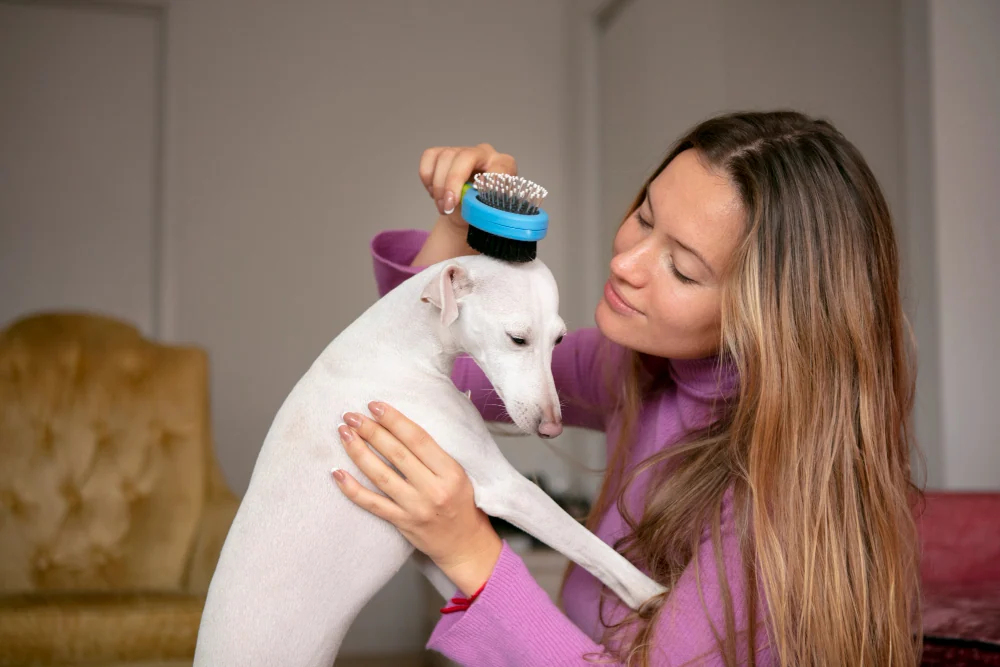
- Brush in the direction of hair growth, working in small sections from head to tail.
- Go down to the skin. Lift sections of a long coat and brush from the roots outwards; finish with a comb to find hidden tangles.
- Pay attention to friction areas: behind the ears, the armpits, the collar area, the belly, the "trousers" on the back legs and the tail.
- Tease small tangles apart with your fingers or the end of a comb, holding the hair at the base so you do not pull the skin.
- Do not cut out mats with scissors. The skin is easily lifted into the mat and cut. Large mats should be clipped by a groomer or your vet; severely matted cats may need sedation.
- Reward with praise and a treat, and stop before your pet becomes impatient.
Do not shave double-coated breeds in summer unless your vet advises it for a medical reason. The undercoat helps insulate against heat and sun, and it may grow back unevenly.
Bathing your dog
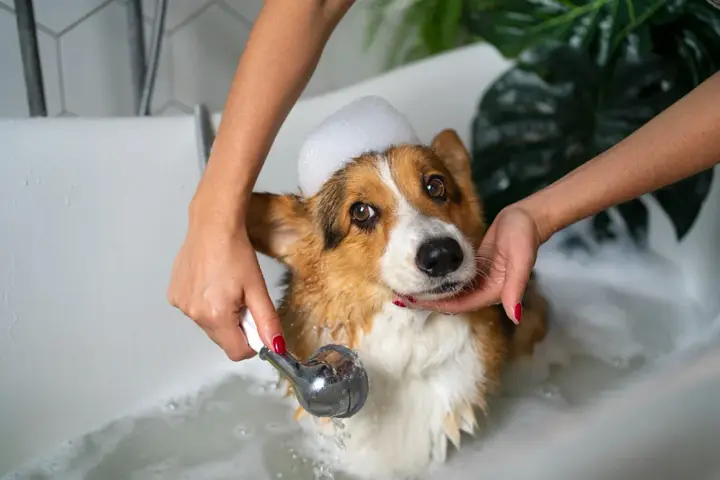
Most dogs only need a bath every 1–3 months, or when they are dirty or smelly. Too frequent bathing can dry the skin. Dogs with skin conditions may need medicated baths on a schedule set by your vet.
What you need
- A dog shampoo (human shampoo and washing-up liquid have the wrong pH and dry the skin).
- A non-slip mat for the bath or shower tray.
- A jug or shower head with lukewarm water.
- Two or three absorbent towels, and a hairdryer on a cool setting if your dog tolerates it.
- Cotton wool for the ears (never cotton buds deep in the ear canal).
Step by step
- Brush first. Wetting a matted coat tightens the mats.
- Check the water temperature on your wrist: it should feel lukewarm.
- Wet the coat thoroughly, starting from the neck and working back. Keep water out of the eyes and ears.
- Apply shampoo and massage it in, following the label. Clean the face gently with a damp cloth instead of shampoo.
- Rinse very well. Shampoo left in the coat is a common cause of itching and flaky skin.
- Use conditioner for long or dry coats if you like.
- Towel dry, then let your dog dry in a warm room, or use a hairdryer on a low, cool setting held at a distance.
- Keep your dog indoors until fully dry in cold weather.
Do cats need baths?
Healthy cats groom themselves and rarely need a bath. Exceptions include cats that are very dirty or covered in something harmful (paint, oil, chemicals), some long-haired or hairless breeds such as Sphynx cats, and medicated baths prescribed by a vet.
If your cat has something toxic on its coat, do not let it groom; contact your vet straight away. For bathing, use a cat-specific shampoo, a few centimetres of warm water, a calm second person and a warm towel. Many cats tolerate being wiped with a damp cloth better than a full bath.
Products: what to choose
- Use shampoos made for dogs or cats, not human products.
- For sensitive skin, choose a mild, fragrance-free product, and ask your vet before using anything new.
- Never use dog products on cats without checking: some contain essential oils or insecticides, such as permethrin, that are toxic to cats.
- Avoid products containing tea tree oil for cats.
- Medicated shampoos (for example for yeast or bacterial skin infections) should only be used as directed by your vet.
Grooming through the seasons
- Spring and autumn: most pets moult more. Brush more often to remove dead undercoat.
- Summer: check for grass seeds (especially in Spaniels' ears and between the toes), ticks and harvest mites. Keep fur around the back end clean to prevent flystrike in long-haired or overweight pets.
- Winter: dry paws after walks, rinse off road grit and salt, and trim fur between the pads to stop ice balls forming.
Nutrition and skin health
A dull, flaky coat is often a sign of diet or health problems. A complete diet with enough good-quality protein and essential fatty acids supports healthy skin. Fish oil supplements can help some pets with dry skin, but ask your vet about the right dose.
When to see a vet
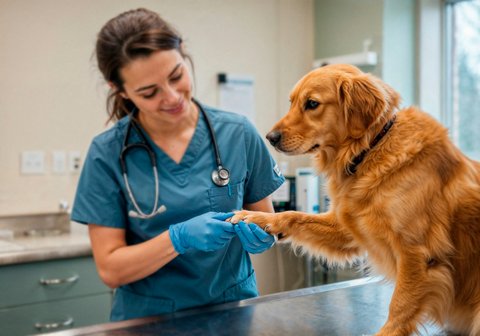
Book an appointment if you notice:
- persistent itching, licking or chewing;
- hair loss, bald patches, redness, scabs or a strong smell from the skin;
- dandruff that does not improve with regular grooming;
- lumps or bumps, especially ones that grow or change;
- ear redness, discharge or head shaking;
- a grass seed you cannot remove, or sudden head shaking after a walk;
- your cat has stopped grooming or has a greasy, unkempt coat (often a sign of pain, illness or weight problems).
Frequently asked questions
How can I get my pet used to grooming?
Start young with short, gentle sessions and lots of treats. Touch paws, ears and tail briefly, then reward. Gradually introduce the brush. If your pet becomes stressed, stop and try again later with a shorter session.
My dog smells soon after a bath. Why?
Persistent odour can come from skin infections, ear infections, dental disease or anal gland problems. If a bath does not help for more than a few days, ask your vet to check.
Can I use baby shampoo on my dog?
It is milder than adult shampoo but still designed for human skin. Occasional use is unlikely to cause harm, but a dog shampoo is a better choice.
Should I take my dog to a professional groomer?
For many breeds with long, curly or wiry coats, yes, every 6–12 weeks. Choose a groomer with good reviews and ask about their experience with your breed and how they handle nervous dogs.
My long-haired cat is badly matted. What should I do?
Do not try to cut the mats out at home. Ask your vet or an experienced cat groomer; severe matting is often clipped under sedation to avoid pain and injury. After that, daily combing will keep the coat in good condition.
Paw4care editorial team
Sources
- How often should you groom your pet?, PDSA, accessed 2026-11-15.