Contents
- What happened
- Where this is
- Why the crabs head for the sea
- The link with the Moon
- Months of preparation
- Closed roads
- Crab bridges
- How breeding works
- Millions of larvae
- Little crabs
- The crabs' role in the forest
- The threat from yellow crazy ants
- Biological control
- Tourists and crabs
- What a red crab looks like
- How long the journey takes
- How crabs are protected from cars
- An island reserve
- Why it matters for science
- What this means for Europe
- Wildlife bridges in Europe
- Animals on the roads
- Pet crabs and crayfish
- If you hit an animal
- What happens next
- When to see a vet
What happened
On 16 November Euronews showed footage from Christmas Island, where the annual red crab migration began on 14 and 15 November. Tens of millions of crabs came out of the rainforest and headed for the coast. The island's roads, bridges and pavements were covered with a solid red carpet of moving animals.
Where this is
Christmas Island is a small Australian external territory in the Indian Ocean, south of the Indonesian island of Java. Most of the island is covered in rainforest and is part of a national park. About two thousand people live there, along with a huge number of red crabs, which are found only on this island and the neighbouring Cocos Islands.
Why the crabs head for the sea
Red crabs live in the forest and breathe air, but they breed in the sea. Every year, when the wet season begins, they set off for the coast to mate and lay their eggs. The rain gives the crabs the moisture they need: in dry weather they quickly lose water and may die on the way.
The link with the Moon
The timing of the migration is closely linked both to the rain and to the lunar cycle. Females release their eggs into the ocean before dawn, as the tide recedes during the last quarter of the Moon. At this time the difference between high and low tide is smallest, and the eggs are carried out to sea more safely. That is why scientists and rangers calculate the approximate dates in advance.
Euronews, Parks Australia; 16.11.2026
Months of preparation
The migration is managed by Parks Australia, Australia's national parks agency. Preparations begin several months in advance. Staff clear the underpasses beneath the roads, build special crab bridges and put up kilometres of roadside fencing. The fences stop the crabs from getting onto the road and guide them towards safe crossings.
Closed roads
During the migration some roads on the island are closed, and where traffic is necessary, drivers are asked to go slowly. Road closure signs are put up. Sometimes residents and park staff sweep crabs off the road with rakes and brooms to let cars through. The crabs' shells are tough, but wheels crush them, and sharp fragments puncture tyres.
Crab bridges
One of the island's best-known features is its special crab bridges. These are overpasses with netting above the road, which the crabs climb to cross the carriageway. Footage of thousands of crabs clambering over such a bridge has been seen around the world. The bridges and underpasses make it possible to protect both the crabs and the island's traffic.
How breeding works
The males reach the shore first. They dig burrows not far from the sea, where mating takes place. The males then return to the forest, while the females stay in the burrows to brood their eggs. About two weeks later the females go down to the water and release their eggs into the ocean, after which they too go back to the forest.
Millions of larvae
The eggs hatch in the sea into larvae, which live in the plankton for several weeks. Many of them become food for fish, manta rays and whale sharks, which come to the island at this time especially. After a month, the survivors turn into tiny crabs and come ashore to climb up into the forest.
Little crabs
Sometimes the number of young crabs coming ashore is enormous, and the shores are covered with billions of tiny red dots. But this does not happen every year: in some years almost all the larvae die at sea. The crab population relies on the rare good years.
The crabs' role in the forest
Red crabs are an important part of the island's ecosystem. They eat fallen leaves, fruit and flowers, recycle the forest floor and fertilise the soil. Without them, the island's forest would look quite different. So protecting the crabs means protecting the whole unique rainforest.
The threat from yellow crazy ants
The main danger to the crabs is the yellow crazy ant, introduced by people. The ants form huge colonies, attack the crabs and spray them with formic acid, blinding and killing them. The ants have wiped out tens of millions of crabs. To fight them, a tiny wasp that undermines the ants' food source has been released on the island, and baits are used.
Biological control
The wasp released on Christmas Island parasitises insects whose sugary secretions the ants feed on. Without this food, the ant supercolonies weaken. The project was prepared over many years to make sure the wasp would not harm the island's native wildlife. It is an example of the careful use of biological methods against invasive species.
Tourists and crabs
The migration attracts tourists from all over the world. Flights and hotel rooms for the migration season are booked up well in advance. Tourists are told the rules: do not pick up crabs, do not disturb them and drive slowly. For a small island this is an important source of income.
What a red crab looks like
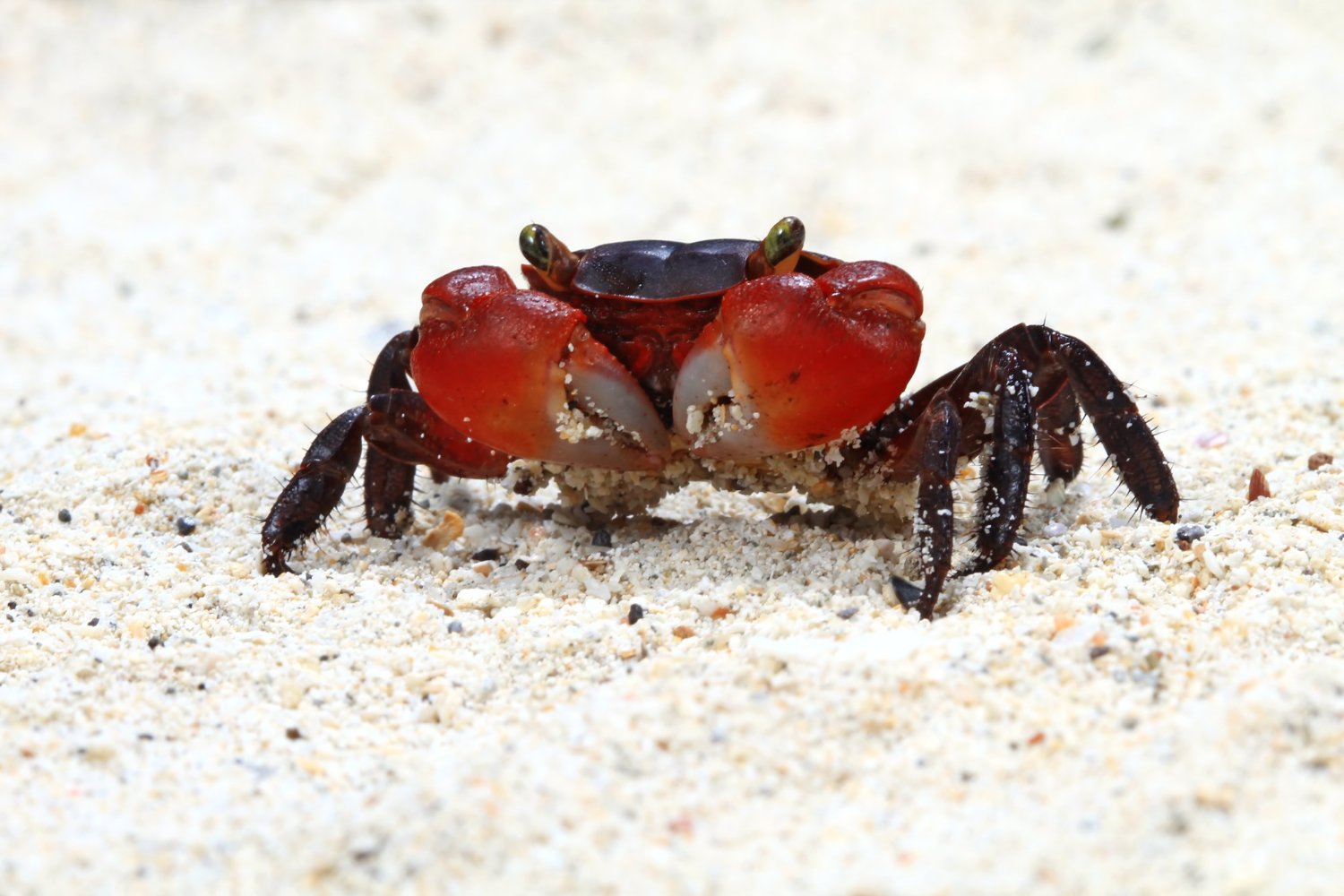
The Christmas Island red crab is a fairly large land crab with a bright red shell about ten centimetres wide. Males have larger claws than females. The crabs live in burrows in the damp forest and hide for most of the dry season, coming out mainly in the morning and after rain.
How long the journey takes
The journey from the interior of the island to the coast can take a crab about a week. The crabs move mainly early in the morning and in the evening, when it is cooler, and hide in the shade in the heat. If the rain stops, the migration may slow down or pause.
How crabs are protected from cars
As well as fences and bridges, temporary rules apply on the island. Some sections of road are closed for hours or days, and where traffic is necessary, park staff clear the way. Residents and tourists are asked to plan their journeys around the migration.
An island reserve
Most of Christmas Island is part of a national park. It is home to rare birds, flying foxes and other animals found nowhere else. The red crabs are the island's best-known symbol. Its wildlife is vulnerable to introduced species such as ants, rats and cats, so these are closely monitored.
Why it matters for science
The red crab migration is a useful model for studying how animals respond to rain, temperature and the phases of the Moon. Scientists note that climate change may shift the timing of the wet season. This could affect the timing and success of the migration, and therefore the number of crabs.
What this means for Europe
Europe also has mass migrations of animals across roads: in spring toads and frogs head for ponds, and in autumn newts and salamanders. In Germany, the Netherlands, Austria and other countries, temporary fences, buckets for carrying them and permanent tunnels under the roads are installed for them. Volunteers carry amphibians across roads at night.
Wildlife bridges in Europe
For larger animals, Europe builds green bridges, or wildlife overpasses, over motorways. Deer, wild boar, foxes and lynx use them to cross. These structures reduce collisions between vehicles and animals and help keep populations from becoming isolated. The principle is the same as on Christmas Island: guide the animals to where it is safe to cross.
Animals on the roads
Every year millions of animals die on Europe's roads, from hedgehogs and toads to deer. It is dangerous for drivers too: a collision with a large animal can lead to a serious accident. Wildlife warning signs are put up where animals cross most often, and drivers should slow down there, especially at dusk.
Pet crabs and crayfish
In Europe, some people keep hermit crabs and freshwater crayfish at home. They need humidity, the right temperature and hiding places, and hermit crabs need spare shells. Exotic crayfish and crabs must never be released into the wild: some species have become invasive in Europe and are displacing native crayfish.
If you hit an animal
- Stop somewhere safe and turn on your hazard lights.
- Do not approach an injured large animal.
- Call the police or an animal rescue service.
- Mark the spot so that specialists can find the animal.
- If it is a pet, take it to a vet.
What happens next
The migration will continue for several weeks. Park staff will monitor the crabs, open and close roads and count the animals. Later, once the females have released their eggs, the wait for the young crabs will begin. If it turns out to be a good year, in a month the island's shores will turn red again, this time from millions of tiny crabs.
When to see a vet
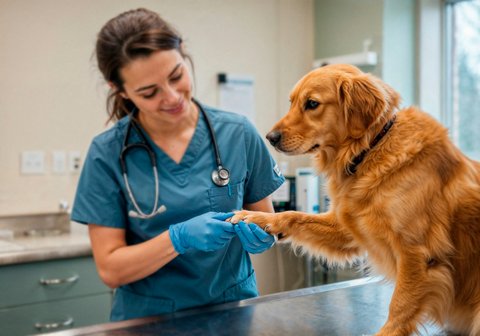
If you keep hermit crabs or crayfish at home and notice that an animal has stopped eating, stays still for a long time, is losing legs or its shell has become cloudy, contact a vet who works with exotic animals. If your dog or cat has been hurt on the road, even without visible wounds, take it to a vet urgently.
Sources
- Euronews, 16 November 2026