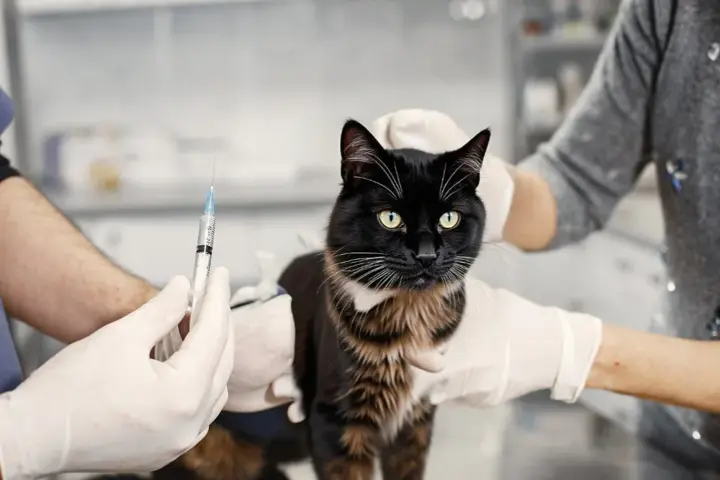
How a microchip is read
A microchip has no battery. The scanner sends radio waves that activate the chip, which sends back its 15-digit code. The reading distance is only a few centimetres, so the scanner must pass close to the chip.
Reading the chip and finding its registration details are two different steps. If a number appears on the scanner but the owner's details cannot be found, the chip has already responded. The problem is then investigated through registration or whether details are up to date. Implanting a new chip alone does not resolve a missing registration entry.
A microchip is not a tracking device. It cannot show an animal's location on a map or find a lost pet remotely. An ordinary chip stores an identification number through which the correct registry entry can be accessed. The owner's contact details are not written directly into the chip under the skin.
The most common reasons
- The chip has moved
A chip implanted on the left side of the neck can move under the skin over time, for example towards the shoulder or elbow. Modern chips have a coating that reduces migration, but it remains possible.
- The scanner does not recognise the chip type
An ISO 11784/11785-compliant chip operates at 134.2 kHz. Other frequencies, such as 125 kHz, have been used in some countries and in older chips. Not every scanner can read them.
- Scanning technique
The scanner is moved too quickly, too far away or over only one spot. Thick fur, long hair or a layer of fat can make reading more difficult.
- Scanner condition
A weak battery or faulty device does not read reliably.
- Interference
A metal table, metal collar or nearby electrical equipment can interfere with scanning.
- The chip is faulty
This is rare but possible, for example after a severe impact.
The implantation site can vary by country and practice. Chips are commonly implanted on the left side of the neck in continental Europe and often between the shoulder blades in Britain. Checking an animal from abroad must therefore not be limited to one assumed implantation site.
A failed reading alone does not show that a chip has been struck or broken. The animal's movement, matted fur, chip depth, scanner orientation and compatibility can affect detection. A chip fault is assessed only after a thorough check. A previous successful reading and the chip number are useful background information.
What to do
- Scan the whole body calmly. Start at the neck and between the shoulder blades, moving the scanner slowly in small circles. Then scan the shoulders, sides, chest and front legs.
- Change the scanner's angle. The chip's position under the skin affects reading, so turn the scanner in different directions.
- Remove metal. Take off the collar and harness and move away from a metal table.
- Try another scanner, preferably a multi-frequency model that also reads non-ISO chips.
- Feel gently. A chip can sometimes be felt under the skin as a small, hard grain.
- Book a veterinary appointment. If needed, the chip's position can be checked on an X-ray.
Scanner function can be checked with a known working chip before examining the animal. Follow the manufacturer's instructions on scanning direction and handling. The same hand movement may not work equally well with every scanner model. Keep the animal calmly still to allow a systematic check.
If the chip is not found in the usual area, continue scanning the rest of the body and limbs. Slow movements covering the area and changes in scanner orientation are more useful than repeatedly passing quickly over one point. Record an unclear result and check with another device before deciding on a new identifier.
A small grain that can be felt does not reveal the number stored in the chip or whether it works. Imaging can show the location of a non-responsive chip, but an X-ray does not replace an electronically read identification number. Your vet decides whether imaging is needed when there is evidence of a chip but it cannot otherwise be located.
What to bring to the appointment
Bring your pet's passport, microchipping certificate and any previous registration details. Say when the chip was last read and whether it has worked intermittently. If the animal may have two chips, bring details of both. This allows the need for a new chip and entries in documents to be assessed against the existing history.
Ask for the full number and any unusual location to be recorded. A working chip that has moved can be found more easily later when its location is known. If the chip cannot be read, the checks performed and the reason for any replacement are recorded in the clinical notes.
Can a microchip be replaced?
- A new chip: if the chip does not work, your vet implants a new one. Report the new details to the relevant registry according to local requirements. Record both numbers on the certificate and in the pet's passport where applicable.
- Removing the old chip: a non-working chip is not usually removed because removal requires minor surgery. It does not harm the animal.
- Travel: if the chip number changes, your vet records the new number in the relevant travel document.
A new microchip is usually implanted under the skin with a needle, and the procedure does not normally require surgery or general anaesthesia. The advice about leaving a chip in place applies to one causing no symptoms. If there is pain, inflammation or another tissue change around it, your vet assesses the situation and any need for removal separately. Do not try to push a chip back into position or dig it out at home.
Check the local deadline for reporting a replacement chip to the relevant registry. Details may include the new identification code, the implanter and the implantation date. Check other registries you use separately too. An entry in the veterinary clinical record and a registry update are not the same thing.
Checking before travel
Adding a new number to a passport does not, in every situation, guarantee eligibility to travel. It must be possible to verify the animal's identity and link any previous rabies vaccination to that particular animal. If the old chip does not respond at all, your vet checks whether travel preparations need to be repeated.
Depending on the route and applicable rules, a completely unreadable chip may mean a new chip, a new rabies vaccination and a new travel document are needed. Waiting periods after vaccination or tests can also affect departure. Investigate a chip problem before the travel date, rather than at the port or airport.
If the old chip can still be read, its function and the reading date are documented when the new chip is implanted. In this situation, contact the vet preparing the travel documents before the procedure. The process depends on the departure country, destination and document being used.
Check current requirements for your particular journey, including any transitional arrangements, rather than relying solely on an old regulation number or experience from a previous trip. Do not assume that an existing compliant, working chip must automatically be replaced because of a new country-code requirement; confirm the rules that apply before departure.
If a foreign chip does not meet the destination's technical requirements, you may be required to provide a suitable scanner. Check this with the relevant authority and transport company before travelling. A multi-frequency scanner helps with identification, but carrying your own device does not remove other travel requirements.
How to prevent problems
- Ask your vet to scan the chip at an annual check-up.
- Keep registry details up to date: a chip cannot help if the telephone number is out of date.
- Choose an ISO-compliant chip.
- When bringing an animal from abroad, promptly check that a locally used scanner can read the chip.
Check how your registry updates addresses and whether any linked official records also need updating. Do not assume that a change of address also updates a telephone number: check and update contact details separately as needed. Follow each registry's own instructions for updating information.
After microchipping, confirm which registry the details have been submitted to and whether registration is complete. When moving home or transferring ownership or keepership, also check that the correct person can be contacted. If a chip has been replaced, preserve the link between the old and new numbers in the documents so either reading can be connected to the same animal.
Frequently asked questions
Can a phone read a microchip?
No. An ordinary phone cannot read a pet's ISO microchip; a separate scanner is needed.
Is microchipping dangerous?
No. Complications such as inflammation or swelling at the injection site are rare. However, the procedure is not entirely without risk: unusual swelling, discharge or pain is a reason to contact a vet.
Can a microchip fall out?
Very rarely, a newly implanted chip can come out through the injection site if the wound opens. The chip is therefore scanned immediately after implantation and again at the next visit where necessary.
Will the chip work abroad?
An ISO-compliant chip can be read throughout the EU. Before travelling outside the EU, check the destination country's requirements.
Why does the chip number appear but the owner cannot be found?
The chip has responded to the scanner, but registration of the number or the owner's details may be missing. Check the correct registry, the exact number and whether details are current. Replacing a chip does not automatically correct registration information.
Can an intermittently working chip be left unchecked before travel?
It is better to have it checked. The vet preparing travel documents needs to know about the problem. Successful reading and documentation of the old chip can affect how implantation of a new chip is recorded and what other preparations are needed. A completely unreadable chip may be a different situation.
This article is for general information only and is not a guide to treatment. If you notice the first signs of illness, contact your vet.
Paw4care editorial team
Sources
- Microchipping: FAQs for pet owners, American Veterinary Medical Association, accessed 2026-11-03.
- Microchipping FAQs, British Small Animal Veterinary Association, accessed 2026-11-03.
- Dogs, cats and ferrets: FAQs, European Commission, accessed 2026-11-03.
- Taking your pet dog, cat or ferret abroad: Microchip, GOV.UK, accessed 2026-11-03.
- Microchipping and Scanning Advice, British Small Animal Veterinary Association, accessed 2026-11-03.
- Get your dog or cat microchipped, GOV.UK, accessed 2026-11-14.
- Microchipping your dog, PDSA, accessed 2026-11-14.