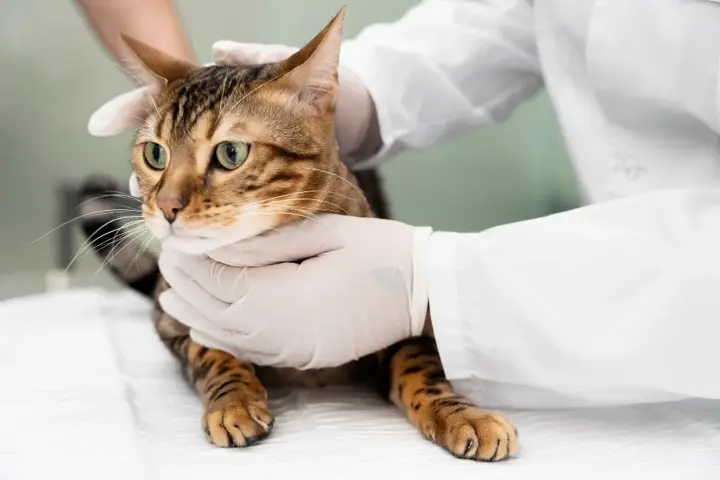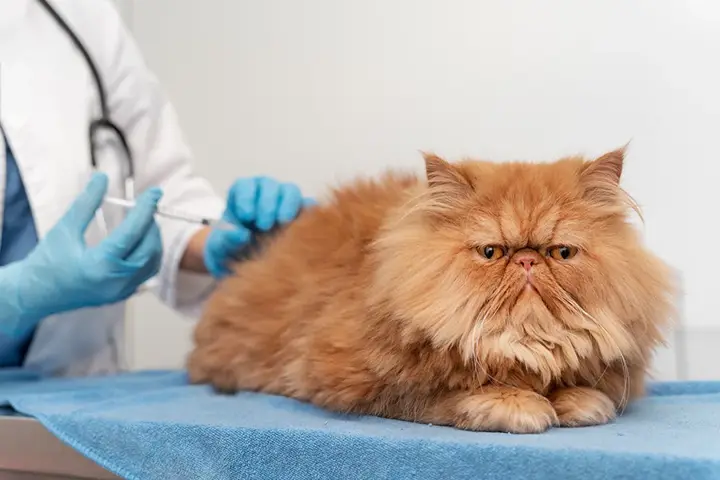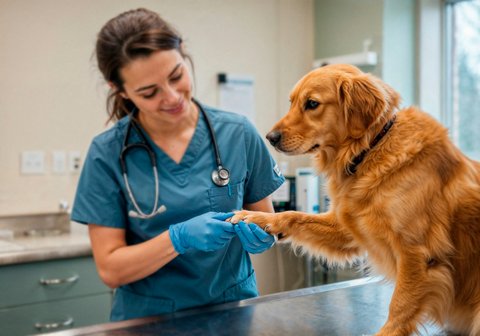
When to see a vet urgently
Diarrhoea needs urgent assessment if your pet also has, for example:
- severe weakness or a collapse in general condition;
- repeated vomiting or an inability to keep water down;
- a large amount of blood in faeces or clear abdominal pain;
- refusal to eat alongside deterioration.
Trying a probiotic must not delay treatment. You can find a vet near you for help.
What is a probiotic?
Probiotics are live microbes that benefit the host animal when given in adequate amounts. Products for dogs and cats may contain strains of Enterococcus faecium, Lactobacillus and Bifidobacterium, for example. Effects depend on the strain: one probiotic is not the same as another.
Prebiotics, by contrast, are fibres such as inulin and FOS that feed beneficial gut bacteria.
A strain is a more precisely identified form within the same microbial species. A bacterial species name on the package does not alone show that the particular strain has been studied for your pet's symptoms. A combination of several strains is not automatically better than one studied strain either. Evidence of benefit from the chosen formulation is what matters.
A prebiotic does not contain live microbes in the same way as a probiotic. A product containing both is often called a synbiotic. The daily diet also affects the gut microbiota, so supplements are not the only way to influence gut function. Your vet may assess changes to dietary fibre or other ingredients according to symptoms, for example.
How probiotics may help
Research evidence relates particularly to:
- acute diarrhoea: a probiotic may shorten its duration in dogs and cats;
- antibiotic treatment: a probiotic may reduce antibiotic-associated digestive upset;
- stressful situations, such as a diet change, house move or boarding stay;
- chronic intestinal disease, as part of veterinary treatment.
Evidence for these uses is not equally strong and cannot be transferred from one product or species to another. In acute canine diarrhoea, the overall evidence does not support a general recommendation for or against all probiotics. Any possible benefit is therefore assessed according to the product and patient, and cannot be promised to every dog with diarrhoea.
Studies in cats provide some positive indications, such as changes in faecal consistency, but overall certainty about clinical effectiveness is limited. A microbiota change observed in healthy cats does not establish that the same product will treat a chronically ill cat. An immune marker measured in a study is also different from demonstrated protection against infectious disease.
Individual strains have been studied in controlled feline trials investigating antibiotic-associated gut changes. Results may help explain a particular strain's effects, but do not show that every probiotic prevents the adverse effects of every antibiotic. Antibiotics are not prescribed simply because altered gut bacterial balance is suspected either.
Probiotics cannot replace diagnosis. Contact a vet if diarrhoea is bloody, your pet vomits or is tired, or diarrhoea lasts more than a couple of days.
Do not wait for a couple of days to pass if your pet is deteriorating. Diarrhoea can result from a feeding change, parasite, infection or another intestinal disease. A probiotic cannot correct significant dehydration, for example, or replace necessary investigation and other treatment. With prolonged symptoms, weight loss and appetite changes are also important information.
Fermented foods
Fermented foods include plain yoghurt, cultured buttermilk and kefir. They contain lactic acid bacteria, but:
- bacterial strains and amounts vary, and they have not been studied in dogs and cats in the same way as animal probiotic products;
- adult dogs and cats tolerate lactose poorly, so dairy products can cause diarrhoea;
- sauerkraut and other human fermented foods often contain salt, onion or seasonings unsuitable for pets; onion and garlic are toxic to dogs and cats.
A little plain yoghurt or cultured buttermilk is a harmless treat for many dogs, but it is not a treatment. If a probiotic is needed, choose a product intended for animals.
Fermentation is a production process in which microbes change food ingredients. The name does not promise that the food still contains live microbes: heating and other processing can remove them. Even when live cultures remain, their precise strain and proven benefit may be unknown. Fermented food and a probiotic supported by research are therefore different concepts.
Dairy tolerance varies between individuals. A cat's lactase enzyme activity decreases after weaning, and lactose digestion can also be impaired by damage to the intestinal lining. Dairy products should therefore not be offered to an animal with diarrhoea in an attempt to repair the gut. A previously well-tolerated treat may not suit them during illness.
Research in people or a food's natural origin does not demonstrate benefit for a dog or cat. If a dairy product causes flatulence, loose stools or other symptoms, stop offering it and tell your vet if needed. There is no need to continue for an assumed microbiota benefit.
Choosing a product
- Purpose
Why is the probiotic needed: acute diarrhoea, antibiotic treatment or a diet change? Your vet can recommend a product appropriate to the situation.
Agree which change to monitor, such as faecal firmness, frequency of defaecation or appetite. Record the starting point before introducing a supplement. A general idea of improving the microbiota is difficult to assess without monitoring symptom changes. Also agree when reassessment is needed if progress is not as expected.
- A product intended for dogs or cats
Choose a product that states its strain and concentration in CFU, colony-forming units, and has been studied in dogs or cats.
Check whether the cited study concerns dogs or cats and healthy or ill animals. Fillers, flavourings and other additives are also part of the formulation. They may matter with food sensitivities, for example, or when your pet is on a strictly controlled diagnostic diet. Show the full ingredient list to the treating vet.
A commercial microbiome test alone does not reveal which supplement your pet needs either. Measuring faecal microbiota is useful in research, but clinical application is limited. If a test is sold with a recommended supplement package, ask your vet how the finding relates to your pet's symptoms and whether there is evidence that the proposed product helps in this particular situation. A bacterial composition labelled abnormal is not an independent treatment plan.
Assessing supplement quality and clinical effectiveness are separate questions. Suitable packaging and clear ingredient information support safe use, but do not yet prove that a supplement will improve a particular patient's disease. Effects are assessed through your pet's condition and symptoms.
- Quality
Check the expiry date and storage instructions: heat and moisture kill live bacteria.
A large stated number of microbes alone does not predict successful treatment if there is no research on the strain or intended use. Follow storage instructions and check the packaging's condition. Products should not be chosen simply because they are described as natural or immune-boosting.
- Ease of administration
Powders are mixed with food and pastes given directly into the mouth. An odourless powder often suits cats.
The method must suit the animal. Tell the practice if a supplement changes the food's smell and your cat refuses the meal. Giving a supplement should not reduce nutritional intake. Do not force a resisting or nauseous animal to swallow a paste; the treating vet can help choose another method.
When probiotics are used
- for mild, acute diarrhoea according to veterinary advice;
- during and after antibiotic treatment;
- for predictable stressful situations, such as a diet change;
- as part of treatment for chronic intestinal disease.
A healthy pet eating a good complete diet does not need a continuous probiotic.
For an animal taking antibiotics, ask the treating vet about product compatibility and administration. Do not change prescribed antibiotic treatment yourself because of a probiotic. The need to continue the supplement is also assessed according to response and underlying disease: the same period of use does not automatically suit everyone.
At home, record appetite, vomiting and general activity as well as faeces. Mention every new treat and supplement too. If several animals in the home develop symptoms, mention this when booking. Investigations can then consider a shared exposure rather than assuming each animal has a self-limiting microbiota change.
Remember
- A probiotic provides support, rather than treatment for serious diseases.
- An animal product is a more reliable choice than human food.
- Ask your vet if your pet has chronic illness or reduced immunity.
Frequently asked questions
Can yoghurt replace a cat's probiotic?
Not reliably. Its microbes may not be the same studied strains, and dairy can cause symptoms in a cat that tolerates lactose poorly. Do not introduce it as a replacement for a probiotic product to treat diarrhoea.
Are all dog probiotics effective for diarrhoea?
Not automatically. Effectiveness depends on the strain and product, and study results vary. There is no general recommendation for or against all probiotics in acute canine diarrhoea. Your vet assesses the need alongside symptoms and other treatment.
Does a healthy cat need a daily probiotic for immunity?
No general need for routine continuous use has been demonstrated for every healthy cat. A change in microbiota or immune markers does not alone prove disease prevention. Appropriate complete food and investigation of symptoms are the starting points; any need for a supplement is assessed separately.
This article is for general information only and is not a guide to treatment. If you notice the first signs of illness, contact your vet.
Paw4care editorial team
Sources
- WSAVA Global Nutrition Guidelines.
- Microbiome, Prebiotics, Postbiotics, American Animal Hospital Association, accessed 2026-11-05.
- Efficacy of probiotic, prebiotic, synbiotic and postbiotic supplementation on gastrointestinal health in cats: systematic review and meta-analysis, Journal of Small Animal Practice, PubMed, accessed 2026-11-05.
- Probiotics in cats and dogs Fact Sheet, Davies Veterinary Specialists, accessed 2026-11-05.
- Diarrhoea in Cats, VCA Animal Hospitals, accessed 2026-11-05.
- Oral administration of Enterococcus lactis strain SF68 speeds the recovery of amoxicillin-clavulanate-induced dysbiosis in cats, Journal of Feline Medicine and Surgery, PubMed, accessed 2026-11-05.
- Malabsorption Syndromes in Small Animals, Merck Veterinary Manual, accessed 2026-11-05.
- Do fermented foods contain probiotics?, ISAPP, accessed 2026-11-05.
- ENOVAT guidelines for antimicrobial use in canine acute diarrhoea, ENOVAT / WSAVA, accessed 2026-11-05.
- 2022 ISFM Consensus Guidelines on Management of the Inappetent Hospitalised Cat, Journal of Feline Medicine and Surgery, accessed 2026-11-05.